
ADHD and Anxiety: When They Look the Same
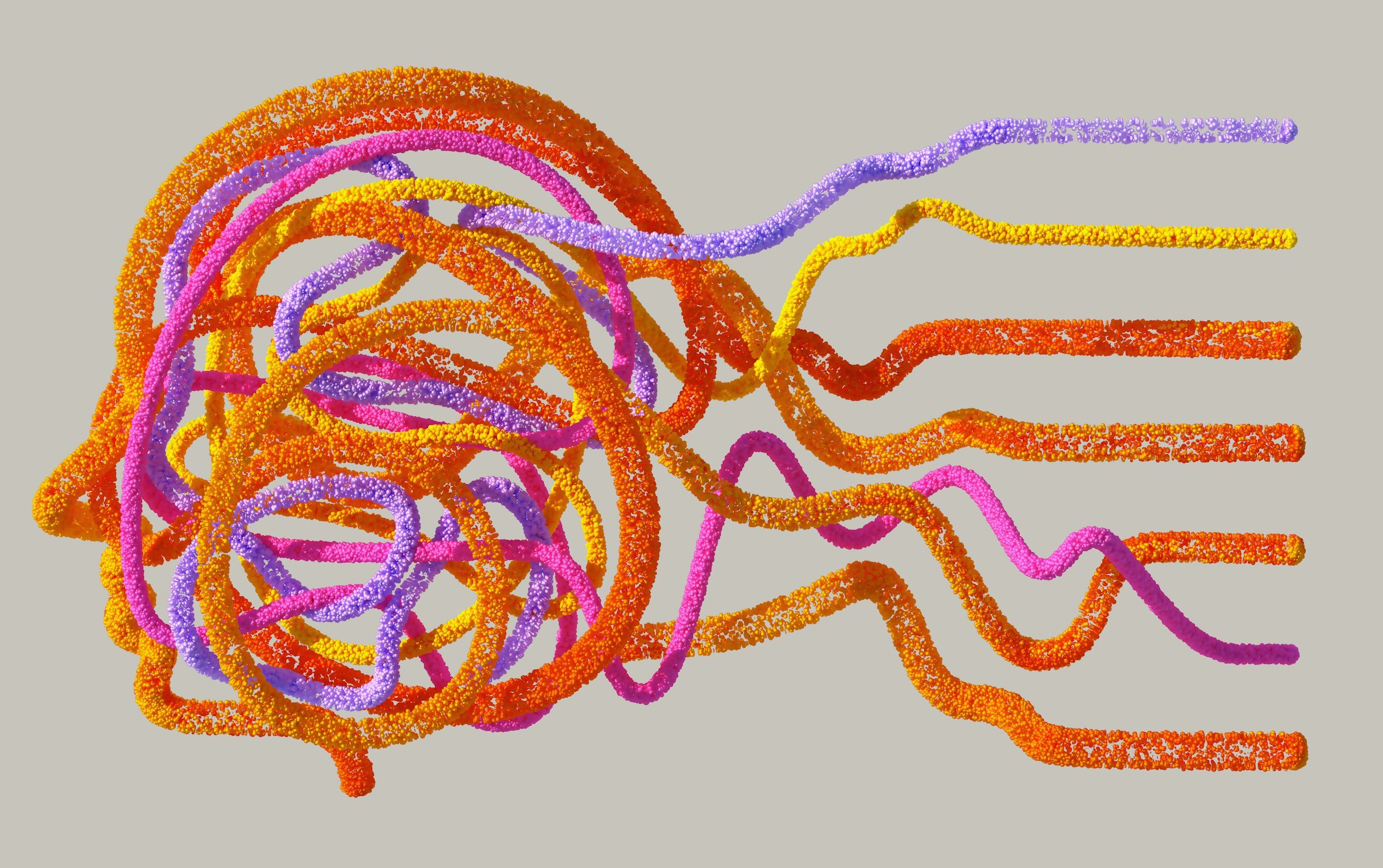
You can't focus. Your mind won't stop racing. You put things off until the last possible moment and then spiral about having done so. You're exhausted by the effort of getting through ordinary days, and somewhere underneath the exhaustion is a worry that never fully goes quiet.
Is this ADHD? Is it anxiety? Is it both?
For a significant number of people, the answer to that last question is yes. ADHD and anxiety co-occur at high rates; estimates suggest that up to 50% of adults with ADHD also have an anxiety disorder. And because the two conditions share symptoms, interact, and respond differently to treatment, getting the picture right matters enormously.
Why They're So Easy to Confuse
ADHD and anxiety can look strikingly similar from the outside and sometimes from the inside too. Both can produce difficulty concentrating, restlessness, avoidance, sleep problems, and a sense of being overwhelmed by demands that seem manageable to others. Both can make it hard to get started on tasks and hard to finish them.
But the mechanisms driving those shared surface features are different. In ADHD, the difficulty with focus is neurological: the brain's dopaminergic and noradrenergic systems regulate attention differently, making it genuinely hard to sustain focus, prioritize, and regulate the impulse to move toward more stimulating things. In anxiety, difficulty concentrating is often the result of cognitive bandwidth being consumed by worry; the mental space that should be available for the task at hand is occupied by fear.
These distinctions are not just academic. If anxiety is the primary driver of concentration difficulties and it's treated as ADHD, the treatment may partially help but miss the core issue. If ADHD is driving a significant amount of what looks like anxiety and it goes unidentified, a person may spend years in therapy processing worry without ever addressing the underlying executive function differences that are generating the stress.
How ADHD Creates Anxiety
For many people, ADHD comes first, and anxiety develops as a secondary response to living with untreated or undertreated ADHD in a world that wasn't designed for their brain.
The experience of repeatedly forgetting things that matter, underperforming relative to your own intelligence, missing deadlines despite genuine effort, and struggling to meet expectations that seem easy for others generates its own anxiety over time. The nervous system learns to brace for the next failure. The inner critic gets louder. The anticipatory worry about what will go wrong because of the ADHD the email that won't get sent, the appointment that will be forgotten, the project that will be started too late becomes its own persistent anxiety that is partly about the present and partly about a long history of things not going as intended.
This is sometimes called ADHD anxiety: anxiety that is downstream of the ADHD rather than an independent anxiety disorder. It may be possible to address it significantly by treating the ADHD effectively. Or it may have developed enough of its own momentum that it needs direct attention alongside the ADHD work.
When Both Are Genuinely Present
For others, ADHD and an anxiety disorder genuinely co-occur; both are present independently, each with its own features and its own treatment needs. This combination can produce some particularly difficult experiences.
The ADHD drives impulsivity and novelty-seeking. The anxiety applies the brakes, sometimes so hard that the person becomes frozen between the pull toward stimulation and the fear of consequences. Procrastination in this picture isn't just ADHD avoidance; it's also anxious avoidance, powered by fear of failure, fear of judgment, or the overwhelm of not knowing where to start. The result is often a person who desperately wants to act but finds themselves unable to, caught between competing neural systems pointing in opposite directions.
Sleep is often significantly disrupted in this combination. The ADHD brain that struggles to downregulate at night runs directly into the anxious brain that uses the quiet of bedtime to process every unresolved worry from the day.
What Treatment Looks Like
Effective treatment for ADHD and anxiety together typically involves addressing both, in a sequence and combination that fits the individual. A few principles tend to hold:
When anxiety is severe, it often needs to be stabilized first because high anxiety can interfere significantly with the engagement and executive function demands of ADHD treatment. When ADHD is the primary driver of anxiety symptoms, treating the ADHD effectively sometimes reduces the anxiety substantially on its own. And when both are genuinely present and independent, integrated treatment that addresses the interaction between them — not just each in isolation tends to produce the best outcomes.
Medication evaluation is often part of the picture, and worth a thoughtful conversation with a prescriber who understands both conditions. Stimulant medication for ADHD can sometimes increase anxiety; non-stimulant options may be more appropriate in some cases. These decisions deserve individualized attention rather than a one-size-fits-all approach.
In therapy, the work typically involves building executive function skills in an anxiety-informed way, scaffolding that accounts for the emotional regulation challenges that come with both conditions while also addressing the anxiety directly through evidence-based approaches.
You Deserve an Accurate Picture
One of the most common experiences among people with both ADHD and anxiety is the sense of having been partially seen for a long time. Diagnosed with one and not the other. Treated for anxiety while the ADHD quietly undermined every coping strategy. Or identified as having ADHD while the anxiety that was driving half the symptoms went unaddressed.
You deserve a clinician who takes the time to understand the full picture, not just the presenting complaint, but the way the two conditions interact in your specific life, history, and nervous system.
At Theory & Method in Salt Lake City and Reno, we work with the complexity. We don't treat diagnoses in isolation from each other or from the person carrying them. We will take the time to understand what you're actually dealing with — and build a treatment approach that fits.
Theory & Method Therapy offers ADHD and anxiety treatment in Salt Lake City, UT, and Reno, NV. Schedule a free consultation at theoryandmethod.co.